
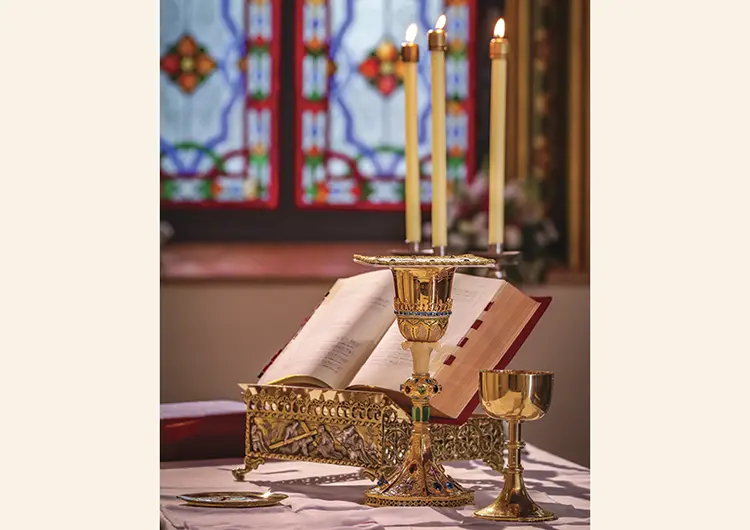

…how the custom of using candles for Mass originated?
In the year 64, the first great persecution against Christians broke out. Anyone who professed faith in Our Lord Jesus Christ could be thrown to the wild beasts in arenas, burned alive in imperial gardens, murdered in the streets, or crucified for the amusement of the populace.
The Church then took refuge in the bowels of the earth, in catacombs dug for corpses and for everything that had to be hidden from the light of day. But, after all, these were the only relatively safe places where the faithful could bury martyrs and gather to pray. In these dark underground chambers, Catholics attended the renewal of the Holy Sacrifice illuminated by oil lamps and candles.
The illumination used to be placed on the ground, at the foot of the altar, this liturgical practice probably extending throughout the High Middle Ages, when, around the first half of the 11th century, candelabras began to be placed on the sacred table itself. To this day, it is prescribed that at least two candles illuminate the altar during Mass, and this can increase to seven if the diocesan bishop is the celebrant (cf. General Instruction of the Roman Missal, no. 117).
In addition to symbolizing Christ, Light of the world, and the fire of charity that He kindles in us by His grace, the flames recall that the Holy Church dawned underground, among the bodies of the martyrs and the fervent faith of persecuted Catholics. ◊
…that, even before being discovered, Brazil was already dedicated to Mary?
The year was 1494. The Treaty of Tordesillas divided the globe – both discovered and yet to be discovered – into two parts, ensuring Portugal and Spain certain areas of exploration and initiating not only the conquest but also the evangelization of the New World.
In November 1499, the experienced navigator Vicente Yáñez Pinzón – who, years before, had commanded the caravel Niña in Columbus’ first expedition in 1492 – set sail from Spain in command of a fleet of four ships. The audacious crossing southward reached South America for the first time.
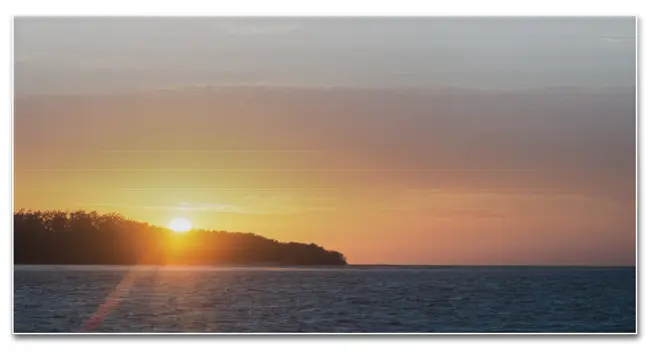
After facing a terrible storm, on January 26, 1500, Pinzón landed at a point on the northeastern coast of Brazil – historians identify it as Cabo de Santo Agostinho, in Pernambuco, or Ponta do Mucuripe, in Ceará – which he named Holy Mary of Consolation. Whichever the location, aware that these were lands outside the Spanish domain in the division of Tordesillas, the fleet headed north, passing through the estuary of the Amazon River – which Yáñez named Holy Mary of the Fresh Water Sea – until reaching the extremities of the Brazilian coast, near the mouth of the Oiapoque River. Later, the expedition departed for the Caribbean.
Although official historiography reserves the title of discoverer of Brazil for Pedro Álvares Cabral, whose armada landed on the coast of Bahia on April 22, 1500, Pinzón’s feat remains a fascinating chapter of history. It stands to illustrate how the country has always been under the maternal gaze of Mary Most Holy. ◊