

May 3 – 5th Sunday of Easter
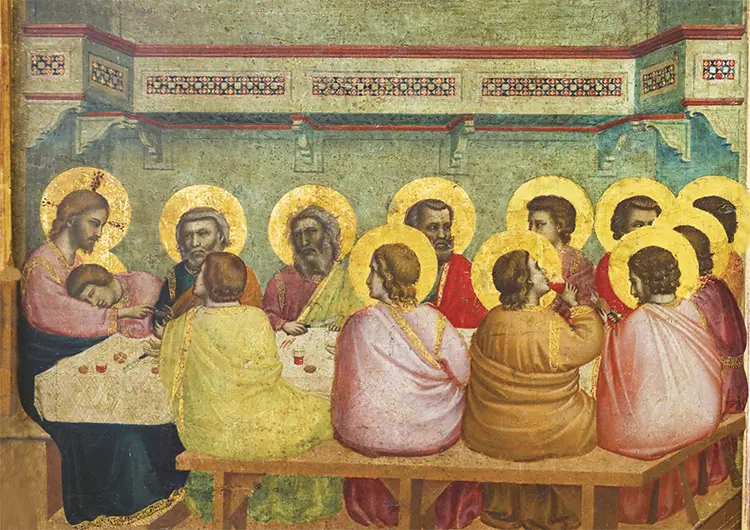
St. John is the only Evangelist who dwells on the sermon delivered by Our Lord at the Last Supper, immediately before He went to the Garden of Olives, the place of His arrest. This Sunday’s Gospel recounts the beginning of that sermon, in which the Divine Master seeks to instil confidence and resolve in His disciples, who would soon be assailed by contradiction and disillusionment.
Responding to the Apostle Thomas, Jesus reveals Himself in a summary that will illuminate the centuries: “I am the Way and the Truth and the Life” (Jn 14:6). Indeed, the crowds had seen in Him a rabbi or a great prophet; some even called Him the Messiah. How far they were, however, from inferring that He was the Incarnate Word Himself!
Shrouded in mystery, the new revelation is further developed by Our Lord in the subsequent verses, without, however, completely removing the veils. Only after Pentecost will the Apostles discover the full depth of that message.
He reveals Himself as “the Way” and then adds: “I am in the Father and the Father is in Me” (Jn 14:11). All of Jesus’ teachings pointed to holiness as a means of achieving communion with the Father in eternal life. However, the Father, pure spirit, is invisible to human eyes… How can we reach Him?
Precisely for this reason the Word became incarnate: with the Father in Him, He makes the Father visible. Thus, the “Way” consists in imitating, in everything, the example given by Our Lord: it is, in short, about placing one’s own feet in His footsteps.
Next, the Redeemer reveals Himself as “the Truth” and explains: “The words that I speak to you I do not speak on my own. The Father who dwells in Me is doing His works” (Jn 14:10). The Son is the Word of the Father, incapable of lying. Therefore, what He says is absolute, indubitable Truth, from which all truly good actions emanate.
Finally, He reveals Himself as “Life” and concludes: “whoever believes in Me will do the works that I do, and will do greater ones than these” (Jn 14:12).
Indeed, no work is effective without grace, participation in God’s own life. And this most perfect, infinite, eternal Life, the Holy Spirit infuses into us precisely so that we may perform His works. However, this divinization by grace is lost through mortal sin, which literally excludes Life from us.
Now, we were not made for death, but for eternal life, forming a spiritual building of which we must be living stones, according to the expression of St. Peter (cf. 1 Pt 2:5). A condition for this is never to lose the state of grace, Life itself within us; always adhering by faith to the words of Truth; and to imitate the Redeemer on the path He has laid out: to carry the Cross of each day, to die to the world and to oneself, to attain holiness!
No other message could bring us more confidence amidst the afflictions we suffer on this earth, provided our eyes are fixed on the “place” that Our Lord prepares for us (cf. Jn 14:2). And for this reason He affirms: “Do not let your hearts be troubled” (Jn 14:1)! ◊