

After more than six years of waiting, a light finally dawns on the horizon for more than a hundred young men of the Heralds of the Gospel who have been awaiting diaconal or priestly ordination.
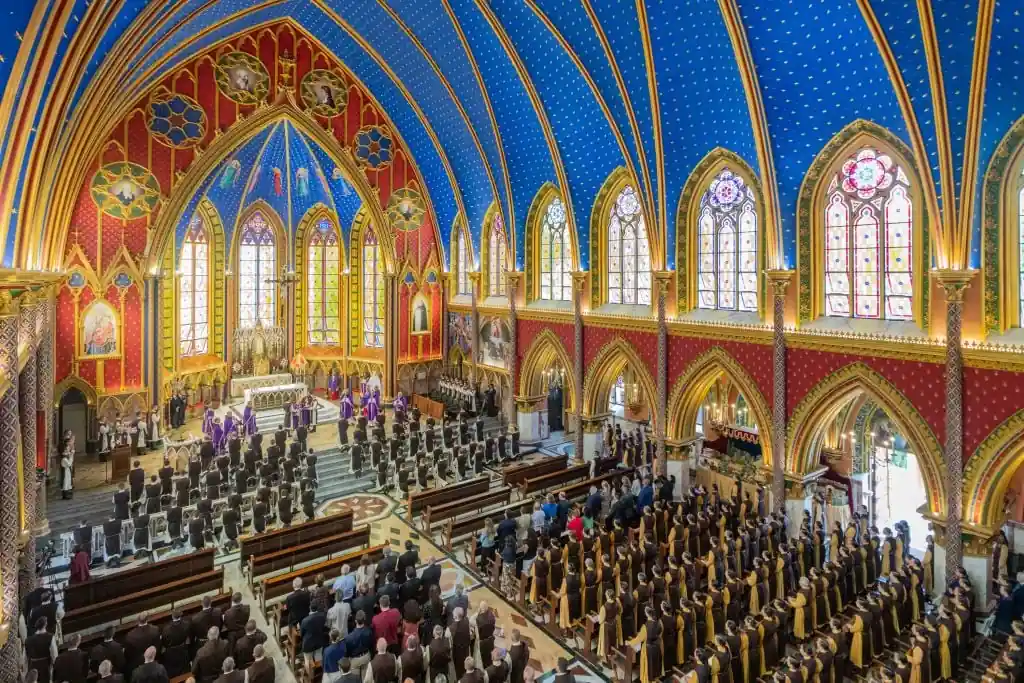
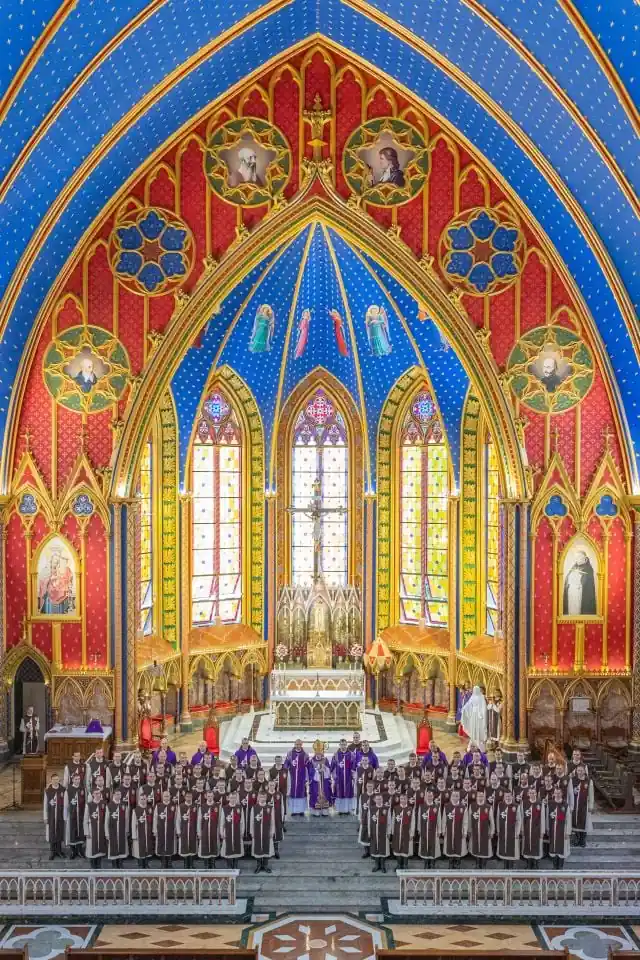
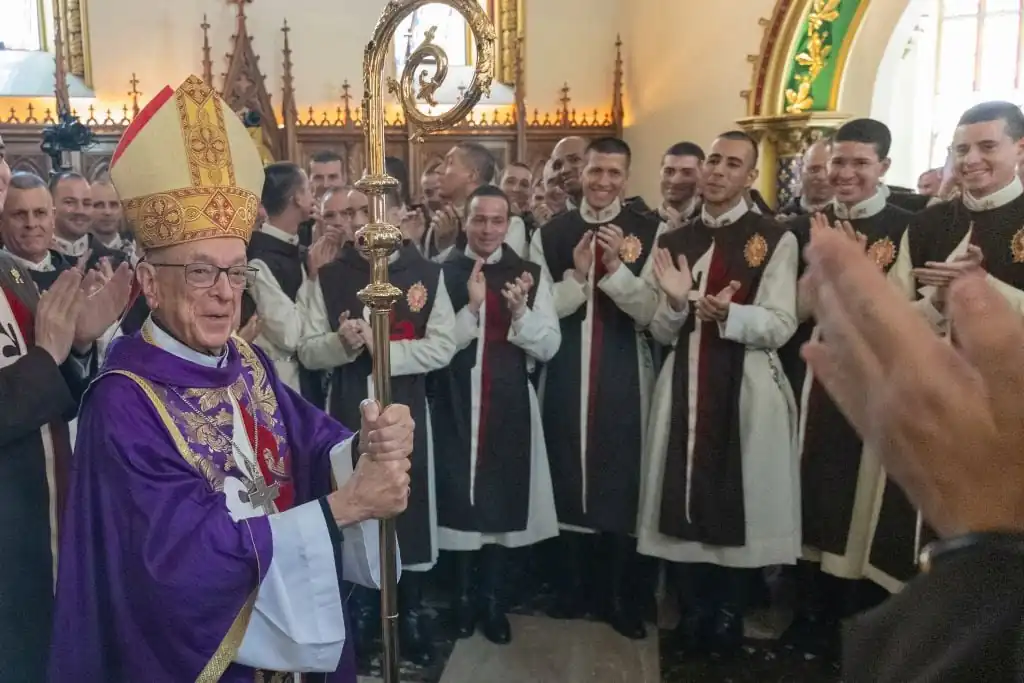
At the Holy Mass celebrated at the Basilica of Our Lady of the Rosary of Fatima, in Caieiras, this Saturday, December 20, , Archbishop Emeritus of Aparecida, conferred the instituted ministries of lectorate and acolytate to 69 members of the . The reception of these ministries is a condition for receiving Sacred Orders, which begin with the diaconate.
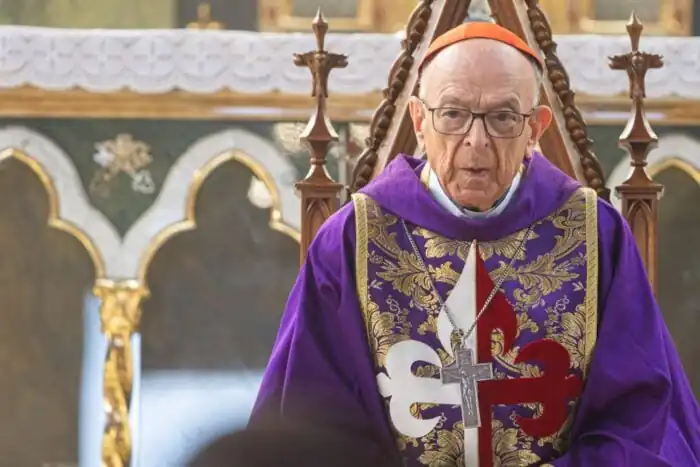
His homily focused on the idea of “hope that does not disappoint” (cf. Rom 5:5), inspired by the motto of the Jubilee of 2025. At the end of his preaching, he announced the long-awaited news: “I hope that in the near future we will be able to confer Sacred Orders to those who are properly prepared.” Card. Damasceno concluded his homily with the following reflection: “In a few days, as we know, the jubilee holy doors will be closed, but the doors of hope in God should remain open in our hearts. I would say they must remain even more open. Among the O Antiphons, today’s has an indirect but special allusion to hope: ‘O Key of David, who opens the gates of the Eternal Kingdom. O come and free the prisoner from the prison, seated in darkness.’ May hope in God illuminate the moments of darkness that often exist in our lives and in our world. May this same hope lift us up, not leave us sitting down or discouraged. I wish you all a happy and holy Christmas and a blessed new year of 2026.”
Card. Damasceno was received in the Basilica by a large turnout of faithful and by the opening address given by Father Alex Barbosa de Brito, EP, who called him a “messenger of peace.”
What does this expression mean? As noted, the priest of the Heralds pointed out that Card. Damasceno speaks “between the lines.”
It is not known exactly what Card. Damasceno discussed recently with Pope Leo XIV, on December 4 (the memorial of Saint John Damascene), but there is a clear sign that darkness is more and more giving way to light – to use a metaphor so common in Advent and also recalled in today’s antiphon.
Indeed, : nearly seven years enduring a commissariat that seemed practically stalled and without diaconal or priestly ordinations.
The message of peace from Card. Damasceno is a turning point toward a positive outcome in the near future. In fact, the Cardinal from Minas Gerais, who remains in office, clearly points to the carrying out of ordinations soon.
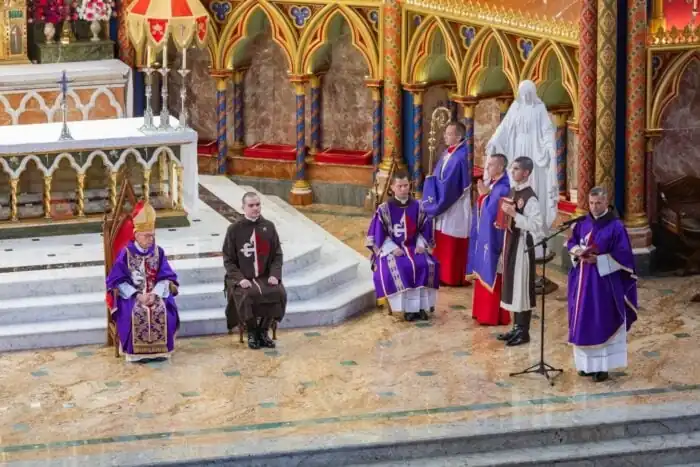
At the end of the solemn celebration, Father Alex echoed the hope proclaimed in the homily, expressing confidence in the , whose first concrete gesture was precisely today’s institution of ministries. The priest commented that the Holy Father granted Card. Raymundo “keys of solution, of resolution, of decisive action” to undertake the next steps.
At the same time, the scope of the next Consistory—announced in November for the dates of January 7–8, 2026—was released today:
“It will be characterized by moments of communion and fraternity, as well as moments dedicated to reflection, dialogue, and prayer. These moments aim to promote common discernment and to offer support and counsel to the Holy Father in the exercise of his high and weighty responsibility in governing the universal Church.”
With the decision announced today by Card. Damasceno, Pope Leo XIV, even before the aforementioned consistory, shows signs of wanting to heal one of the open wounds in the Church in recent years—this one, to the detriment of a pontifical institution, the Heralds of the Gospel, as well as their millions of followers, who are nothing more than sons and daughters of the Church.
If the long-awaited conclusion of the commissariat comes to pass, Leo XIV—through his “ambassador of peace”—will show that the peace he promised since the beginning of his pontificate is brought about not only with words but with concrete gestures. He will already reveal in advance that he recognizes “his high and weighty responsibility in governing the universal Church,” exercised in communion, in charity, and in justice.
Taken from Gaudium Press, compiled by Gustavo Kralj